What is toe walking?
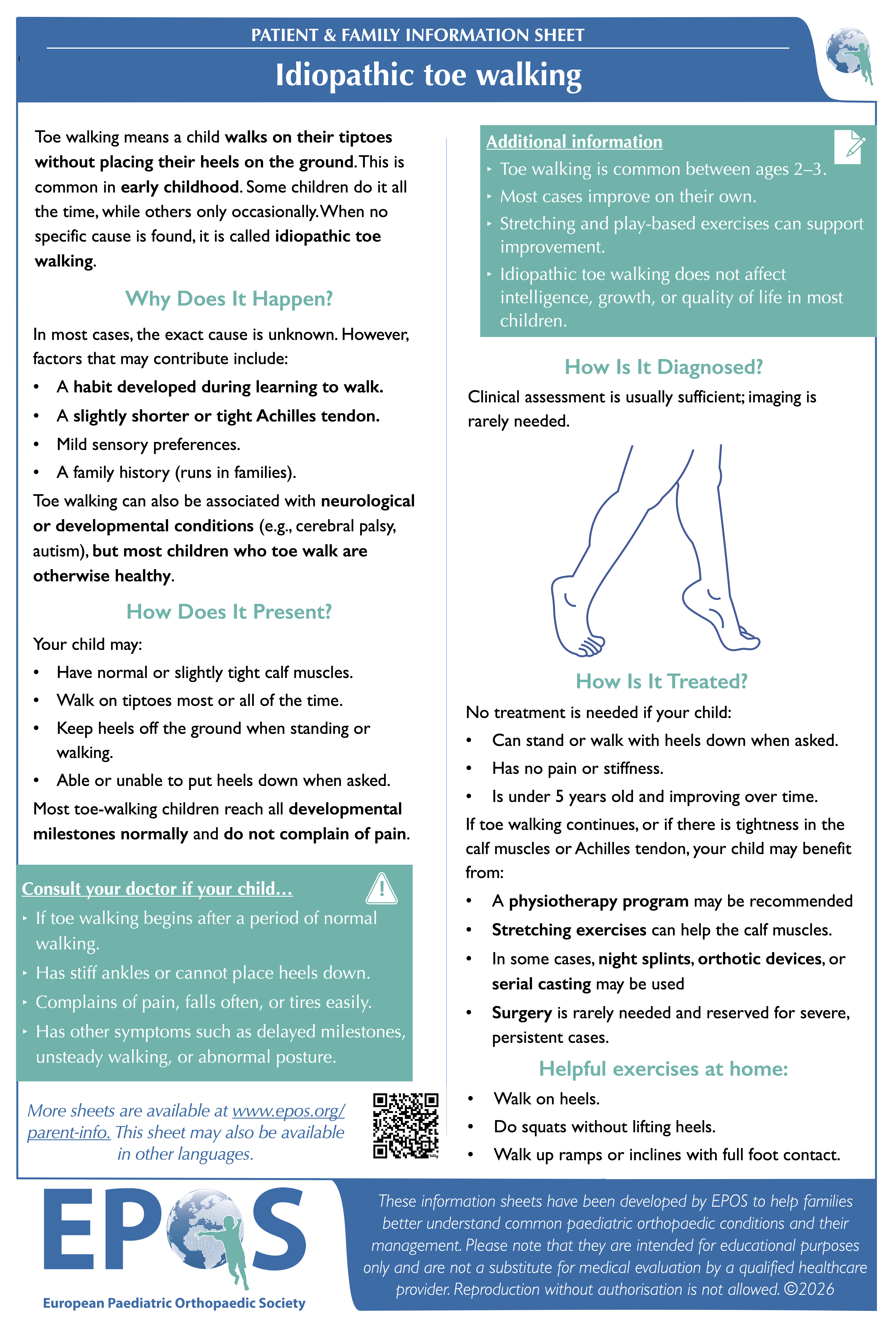
Toe walking, also referred to as idiopathic toe walking, means a child walks on their tiptoes without placing their heels on the ground. This is common in early childhood. Some children do it all the time, while others only occasionally. When no specific cause is found, it is called idiopathic toe walking.
Why does it happen?
In most cases, the exact cause is unknown. However, factors that may contribute include:
- A habit developed during learning to walk.
- A slightly shorter or tight Achilles tendon.
- Mild sensory preferences.
- A family history (runs in families).
Toe walking can also be associated with neurological or developmental conditions (e.g., cerebral palsy, autism), but most children who toe walk are otherwise healthy.
How does it present?
Your child may:
- Have normal or slightly tight calf muscles.
- Walk on tiptoes most or all of the time.
- Keep heels off the ground when standing or walking.
- Able or unable to put heels down when asked.
Most toe-walking children reach all developmental milestones normally and do not complain of pain.
How is it diagnosed?
Clinical assessment is usually sufficient; imaging is rarely needed.
How is it treated?
No treatment is needed if your child:
- Can stand or walk with heels down when asked.
- Has no pain or stiffness.
- Is under 5 years old and improving over time.
If toe walking continues, or if there is tightness in the calf muscles or Achilles tendon, your child may benefit from:
- A physiotherapy program may be recommended
- Stretching exercises can help the calf muscles.
- In some cases, night splints, orthotic devices, or serial casting may be used
- Surgery is rarely needed and reserved for severe, persistent cases.
Additional information
- Toe walking is common between ages 2–3.
- Most cases improve on their own.
- Stretching and play-based exercises can support improvement.
- Idiopathic toe walking does not affect intelligence, growth, or quality of life in most children.
Consult your doctor if your child…
- If toe walking begins after a period of normal walking.
- Has stiff ankles or cannot place heels down.
- Complains of pain, falls often, or tires easily.
- Has other symptoms
Download the information sheet for toe walking
Click on the image below to download the printable information sheet for toe walking.