What is Sever’s disease?
Sever’s disease (also known as calcaneal apophysitis) is one of the most common causes of heel pain in children, especially between the ages of 8 and 13.
It occurs when the growth plate in the heel becomes inflamed, usually due to repetitive stress during periods of rapid growth.
What Causes the Pain?
The Achilles tendon connects the calf muscles to the back of the heel. In growing children, bones often grow faster than muscles, which can make the tendon tight.
Repeated stress from running, jumping, or high-impact sports causes inflammation where the tendon pulls on the heel bone.
How does it present?
- Pain in one or both heels, especially after activity.
- Limping or pain during running or walking.
- Tenderness at the back or bottom of the heel.
- Pain often improves with rest and worsens with sports.
How Is It Diagnosed?
Diagnosis is clinical—based on symptoms and physical exam. X-rays are not usually needed, unless symptoms are atypical.
How is it treated?
Treatment is aimed at reducing pain and inflammation, and can be managed by the pediatrician or primary care physician.
- Temporarily reduce/modify activities that cause pain (like running or jumping). Alternatively, switch to low-impact sports (like swimming or cycling).
- Cold therapy (ice packs) after activity.
- Daily calf stretching exercises, especially the gastrocnemius and soleus muscles.
- Comfortable, supportive shoes.
- Occasionally, soft heel pads may help improve symptoms for a period of 2-3 weeks.
When to Resume Sports?
Once the pain improves, return to activity gradually, continuing with stretches and ice after exercise. Most children recover within weeks or months.
Additional information
- Sever’s disease does not cause long-term problems.
- Symptoms may come and go but usually resolve completely by the end of growth.
- Losing excess weight (if applicable) may help reduce heel stress.
Consult your doctor if your child…
- Has intense pain or symptoms that don’t match the typical picture characteristics mentioned.
- Has redness, swelling, or fever.
- Has pain that doesn’t improve after rest and basic care.
- Cannot walk properly or limps significantly.
- Has persistent pain that prevents night rest.
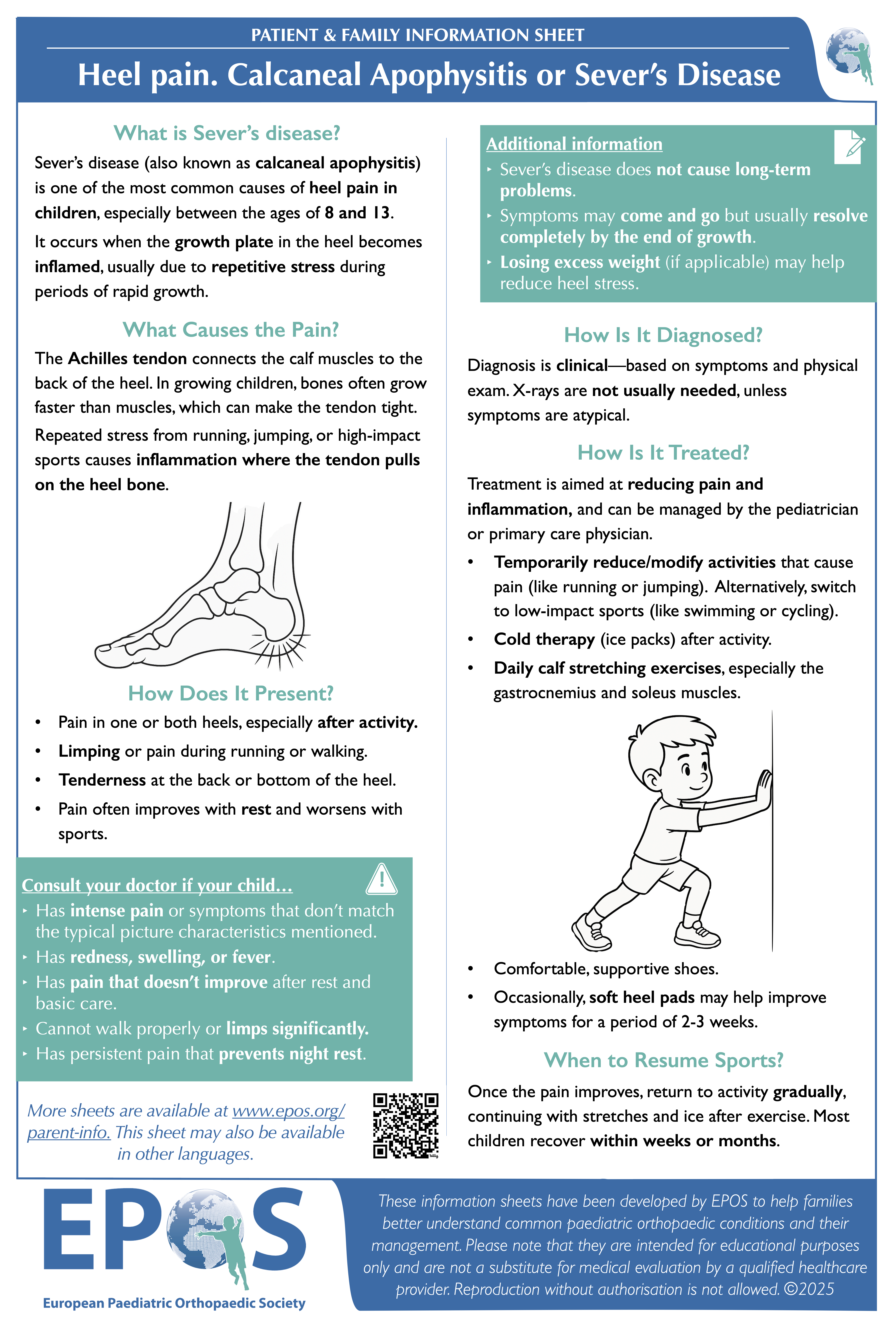
Download the information sheet for Sever's Disease
Click on the image below to download the printable information sheet for Sever's Disease.