What is Metatarsus Adductus?
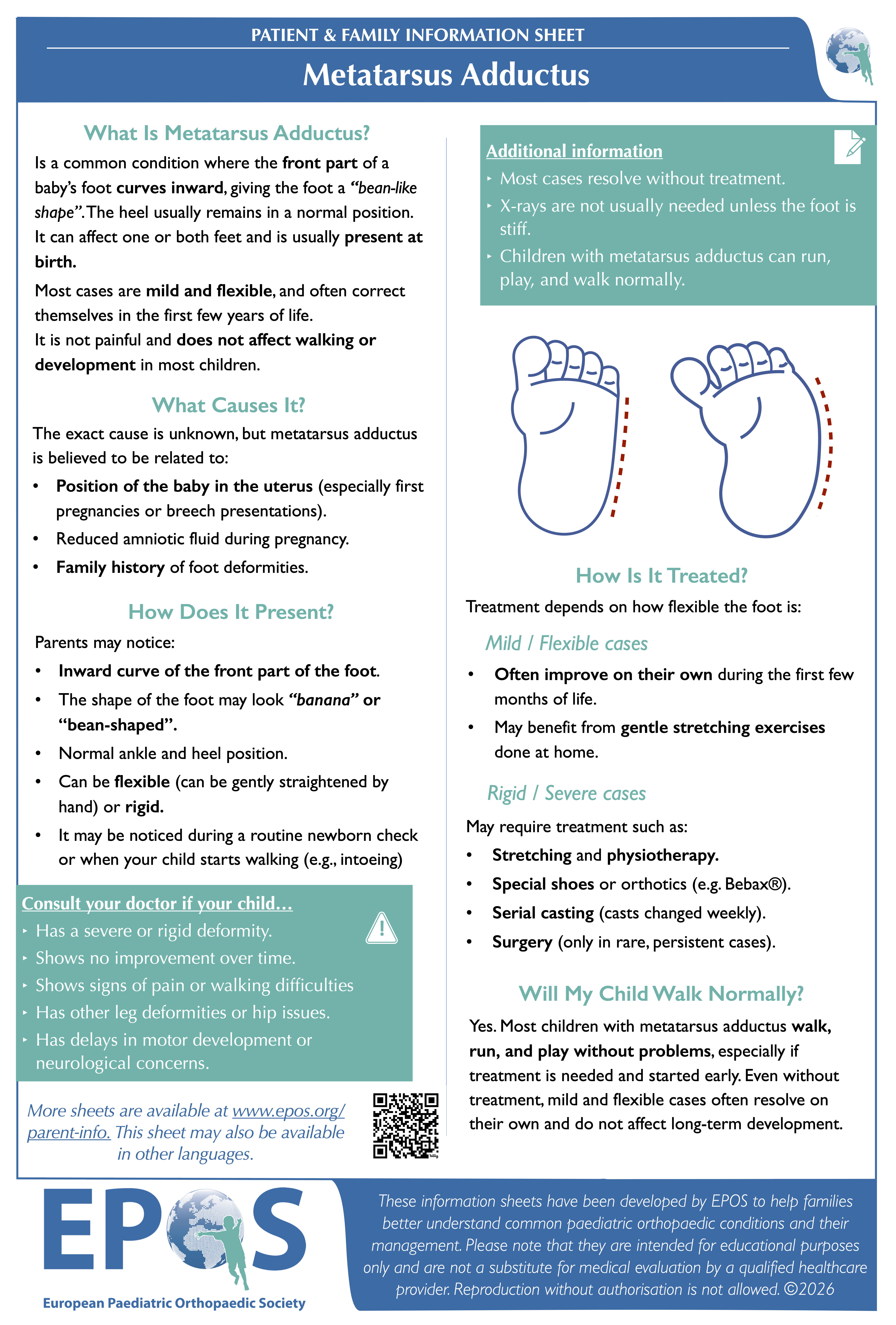
Is a common condition where the front part of a baby’s foot curves inward, giving the foot a “bean-like shape”. The heel usually remains in a normal position. It can affect one or both feet and is usually present at birth.
Most cases are mild and flexible, and often correct themselves in the first few years of life.
It is not painful and does not affect walking or development in most children.
What causes it?
The exact cause is unknown, but metatarsus adductus is believed to be related to:
- Position of the baby in the uterus (especially first pregnancies or breech presentations).
- Reduced amniotic fluid during pregnancy.
- Family history of foot deformities.
How does it present?
-
Parents may notice:
- Inward curve of the front part of the foot.
- The shape of the foot may look “banana” or “bean-shaped”.
- Normal ankle and heel position.
- Can be flexible (can be gently straightened by hand) or rigid.
- It may be noticed during a routine newborn check or when your child starts walking (e.g., intoeing)
How is it treated?
Treatment depends on how flexible the foot is:
Mild / Flexible cases
- Often improve on their own during the first few months of life.
- May benefit from gentle stretching exercises done at home.
Rigid / Severe cases
May require treatment such as:
- Stretching and physiotherapy.
- Special shoes or orthotics (e.g. Bebax®).
- Serial casting (casts changed weekly).
- Surgery (only in rare, persistent cases).
Will my child walk normally?
Yes. Most children with metatarsus adductus walk, run, and play without problems, especially if treatment is needed and started early. Even without treatment, mild and flexible cases often resolve on their own and do not affect long-term development.
Additional information
- Most cases resolve without treatment.
- X-rays are not usually needed unless the foot is stiff.
- Children with metatarsus adductus can run, play, and walk normally.
Consult your doctor if your child…
- Has a severe or rigid deformity.
- Shows no improvement over time.
- Shows signs of pain or walking difficulties
- Has other leg deformities or hip issues.
- Has delays in motor development or neurological concerns.
Download the information sheet for Metatarsus Adductus
Click on the image below to download the printable information sheet for Metatarsus Adductus.