As part of the EPOS Podcast series, Darius Rad recently interviewed the EPOS Scientific Committee to discuss what it takes to develop a successful research project: from the initial motivation and finding an idea ,all the way to getting a research project funded. This article is a summary of their conversation. You can listen to the podcast episode here.
Why doctors choose to do research
Darko Antičević
Doctors generally consider that their essential tasks are to find precise diagnosis and to choose appropriate treatment modalities for their patients. With this in mind, research can easily look like an additional burden layered on top of an already demanding clinical practice. So why would a practising doctor choose to do research at all?
The reasons tend to fall into two broad categories. The first is internal motivation, and it’s worth returning to Abraham Maslow’s Hierarchy of Needs to understand it. At the top of Maslow’s pyramid sits self-fulfilment, or self-actualisation – the drive to achieve one’s full potential, including through creative and innovative work. Doctors in routine clinical practice often encounter something unusual: an unexpected connection between symptoms and diagnosis, for instance, that feels worth sharing with colleagues and the broader medical community. Closely related are what Maslow called esteem needs – the desire for prestige and a sense of accomplishment.
Internal motivation tends to express itself in two ways. The first is the impulse to share a clinical observation, as described above. The second arises when doctors encounter clinical problems that lack a clear explanation or effective treatment, which pushes them toward investigation – to find solutions, deepen understanding, or improve care. As the saying goes in my hospital, it’s “the science of hope”: because clinicians care for vulnerable people, they do research to improve the care they can offer them.
The second category is external motivation, which is less powerful than internal motivation but, in practice, considerably more common. It often takes the form of a department head asking a doctor to contribute to a broader research project, meaning the individual’s research becomes part of a larger team effort. This is increasingly typical in modern medicine. External motivation can also look like competition: seeing a peer in the department pursuing research and not wanting to be left behind, a dynamic especially common in the Western hemisphere.
This framework might seem simple, but digging deeper into almost any case reveals these same two underlying drivers – at least in clinical, as opposed to basic, research, where different rules tend to apply. Beyond motivation and competition, there’s also something more fundamental: curiosity, arguably the essential human trait behind most research. A good mentor or role model can be equally influential, often serving as the spark that draws a young doctor into research as part of their professional path.
Finally, there’s a practical argument for research that goes beyond personal motivation. Medical knowledge becomes outdated quickly, and doctors who don’t engage in research risk falling behind the field’s current breakthroughs. In that sense, research isn’t optional in modern medicine, it’s a professional necessity. It’s also, simply, a way of learning, and learning is something doctors are expected to do throughout their careers.
EPOS Scientific Committee in conversation with Darius Rad on the EPOS Podcast
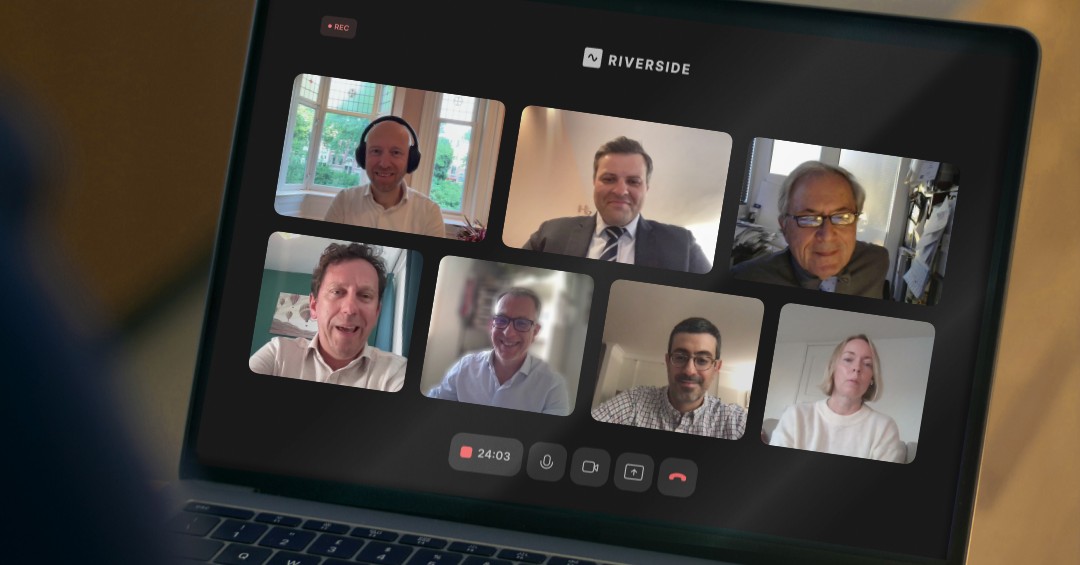
Top row (left to right): Jaap Tolk, Tristan Langlais, Darko Antičević; Bottom row (left to right): Darius Rad, César Fontecha, Ilhan Bayhan, Petra Grahn
Finding a good research idea
Ilhan Bayhan
For most aspiring researchers, the hardest part isn’t conducting the study – it’s finding a topic in the first place. The most common mistake is trying to start with something “big” or “original.” A better approach is to begin with something specific and practical. The strongest topics tend to emerge from daily clinical work, or from the small moments that make a doctor pause and ask, “Why is this done this way?”
This means the idea should come from real life, not from sitting down and trying to brainstorm in the abstract. Forcing a topic into existence is difficult; paying close attention to patients, outcomes, and complications during everyday practice is not. Patterns and unanswered questions tend to surface naturally once you’re looking for them.
This pattern played out repeatedly during my research fellowship in the United States, where five separate projects all originated from problems encountered in clinical practice. The first concerned complication rates associated with intrathecal baclofen pumps, a topic chosen after repeatedly struggling with the tones of children, and recognising how critical that management is before any orthopaedic intervention. Other projects followed the same pattern: gait and knee surgery outcomes in patients with diastrophic dysplasia, a comparison of epiphysiodesis using eight-plates versus a permanent technique, and outcomes of hip surgery in patients with multiple epiphyseal dysplasia (MED). Most of these became published manuscripts, and nearly all of them originated from questions raised by my own clinical struggles.
The questions worth asking are simple ones:
- Why do we do it this way?
- Is there a better method?
- What affects this outcome?
- Can this be measured?
If a question can be turned into something measurable, it can usually become a research topic. To evaluate whether a topic is genuinely worth pursuing, the FINER criteria offer a useful checklist:
- Feasibility: Do you have access to the data or patients?
- Interesting: Does the answer bring value to the scientific community? Is it a topic you are genuinely passionate about exploring?
- Ethics: Is the research safe and morally sound? Can you secure approval from an Institutional Review Board (IRB)? Are participant risks minimised, and is data handled confidentially?
- Novelty: Has this already been answered, or can you add something new?
- Relevance: Does this question matter clinically?
If a topic passes these five, it’s usually a good candidate. For beginners in particular, simplicity is preferable to ambition. A small, well-executed study is far more valuable than a large, incomplete one – retrospective studies, imaging-based measurements, and outcome comparisons are all good starting points. One of the most reliable sources of inspiration is the limitations section of recently published papers: authors frequently spell out exactly what still needs further study, effectively handing readers a ready-made list of research ideas.
From research question to project plan: The PICOT framework
Jaap Tolk
Once a research question has been identified, the next step is to define it clearly enough that it becomes testable. Good research depends on a clear, answerable question, which means taking the time, early on, to pin down precisely what is being investigated.
A well-established method from evidence-based medicine for sharpening a broad interest into a specific, testable question is the PICOT framework. The acronym covers the key elements needed to define a research question with precision.
- P stands for Population: Be specific about age, diagnosis, severity and setting. The more specific you make this, the more homogenous your population will be. But it’s good to realise that it’s also useful to define your population in a practical way, to make your results are applicable and transferrable to clinical practice beyond your study cohort.
- I stands for Intervention or Exposure: Exactly what is it that you will do or change. In peadiatric orthopaedics this often means a new treatment or adaptation of a part of a treatment or procedure. Here it’s also important to be clear about the intervention and what the contrast is with the comparison group.
- That’s what the C in PICOT stands for: Comparison. Most often this will be usual care.
- O stands for Outcome: The primary endpoint; how do you measure the effect of the intervention? In paediatric orthopaedics, radiographs are often used, but in my opinion it's crucial to also consider patient- and family-oriented outcome measures.
- Finally T stands for Timeframe: How long do you plan follow-up? Here you have to think about what’s a realistic timeframe to catch changes that really matter for the condition under study. This can be challenging in paediatrics, as some treatment results will emerge only later in growth, at skeletal maturity or even later throughout adulthood.
The emphasis on family-oriented outcomes reflects a broader shift in how success is defined in the field. Traditionally, paediatric orthopaedics has focused primarily on radiographic outcomes: bone union, joint shape, alignment, the absence of complications. These are vital technical markers, but they don’t always correlate closely with a child’s quality of life.
One alternative, or complement, to radiographic measures is the use of patient-reported outcome measures (PROMs), provided they are validated for children and aligned with the intervention’s goals. These allow for a better assessment of physical function, pain, and quality of life.
Beyond that, it’s worth incorporating measures that capture the broader burden of treatment: psychosocial impact, time spent in hospital, missed school days, missed family time, and the effect on other family members. A “successful” X-ray result still has to be weighed against what it cost to achieve – some treatments require years of invasive surgery and rehabilitation that can themselves interfere with a child’s schooling and social development. Family-oriented outcomes make it possible to fold this broader impact into the overall assessment of a treatment’s success.
Bridging the gap between radiographic success and functional success isn’t simply a matter of selecting different metrics – it starts earlier than that, with who is in the room when a project is designed. Increasingly, patient organisations and “parent-researchers” are being involved from the very beginning. Including these stakeholders at the design stage makes research considerably more applicable to real clinical settings: patients and parents can help identify which questions are genuinely worth asking and how outcomes should be measured.
This applies not only to large randomised controlled trials or multicentre studies but also to smaller research projects – even simply asking a handful of patients what mattered most to them during and after treatment can help surface essential parameters that might otherwise be missed. This collaborative approach also tends to improve inclusion rates, since families are more likely to participate in a study when they’ve helped shape its design and understand why particular outcomes are being measured.
Ethical considerations in paediatric surgical research
Tristan Langlais
Getting ethics approval for studies in paediatric surgery is a challenge many young researchers find daunting, and for good reason: two factors make ethics in this field particularly demanding.
The first is the population itself. Children are considered a vulnerable group, lacking full legal or cognitive capacity to make their own decisions, which places a higher duty of care on researchers. Risks must be minimised as much as possible – particularly long-term risks, such as effects on growth or consequences that may not surface until adulthood.
This means the evaluation can’t focus solely on immediate surgical outcomes; it has to account for long-term effects, which adds considerable complexity. It also raises the bar for justification: a study can’t simply be “interesting,” it has to be necessary, and specifically something that couldn’t instead be studied in adults.
The second factor is the nature of surgery itself. Surgical studies tend to be invasive, and surgical research carries its own distinct challenges – surgery is far harder to standardise than drug trials, for instance. This makes rigorous protocols and meaningful outcome measures essential, covering areas like quality of life, growth, neurological and respiratory function, and recurrence.
Consent in paediatric research is a two-step process. Informed consent from parents or legal guardians is mandatory, but children should also be involved as much as possible through what’s known as assent – a process that depends on the child’s age and maturity, and requires explaining the study in terms the child can understand. Importantly, if a child refuses to participate, that refusal should generally be respected, even if the parents have already consented. This reflects the idea that autonomy develops gradually, and that paediatric research involves not just protecting children, but respecting them as people in their own right.
For junior researchers wondering how to actually get a project approved, a few practical principles help. The first is not to attempt the process alone. Ethics and regulatory pathways are complex, and most institutions have dedicated teams to help, while learned societies can also offer guidance (in France, for example, the French Orthopaedic Society, SOFCOT, supports researchers preparing applications).
The second is to think constantly in terms of risk minimisation, since this is a central focus for ethics committees – asking, for instance, whether radiation exposure can be reduced by using ultrasound or MRI instead of X-rays or CT scans. The third is to integrate research into routine clinical care wherever possible, since aligning a study with existing care reduces the additional burden and risk placed on the child.
Despite these constraints, ethics approval for paediatric surgical research is entirely achievable. It comes down to balance: demonstrating that the child is protected, that the research contributes to medical progress, and that fundamental rights and dignity are respected throughout. The goal isn’t to avoid research; it’s to do it properly. A study that is scientifically sound, ethically justified, and clinically necessary is not just possible to get approved; it’s fully legitimate.
Researching rare diseases in paediatric orthopaedics
Petra Grahn
Definitions of “rare disease” vary slightly by region, but in Europe a condition is generally classified as rare when it affects fewer than 1 in 2,000 people, though many paediatric orthopaedic conditions are far rarer than that, often occurring in 1 in 10,000 people or fewer. A surgeon might see hundreds of common fractures each year, yet encounter only a handful of children with fibular hemimelia, congenital pseudarthrosis, skeletal dysplasias, radial longitudinal deficiency, or severe brachial plexus birth injury over an entire training period. Fibular hemimelia, for example, occurs in roughly 1 in 40,000 births, and radial longitudinal deficiency in about 1 in 50,000 – with the most severe forms of either condition rarer still.
The central challenge in studying rare paediatric orthopaedic conditions is numbers: no single centre treats enough patients to generate strong evidence on its own. Compounding this, these conditions tend to be highly heterogeneous: even children sharing the same diagnosis can differ substantially in anatomy, severity, and functional limitations.
Because children continue to grow, outcomes can also shift over time; a treatment that looks successful at age five may appear very different by skeletal maturity. This makes long-term follow-up especially important, ideally continuing at least until the end of growth, and preferably into adulthood, in order to properly assess the true functional impact on quality of life.
This scarcity of strong comparative evidence also helps explain why treatment traditions often vary between hospitals and countries: decisions are still frequently shaped by local custom and individual experience, since high-quality comparative studies are difficult to perform. That doesn’t mean existing treatments are wrong, but it underscores why collaboration and standardised outcome reporting matter so much – particularly for identifying optimal treatments and the right timing of intervention in growing children.
For researchers looking to study a rare disease, the most effective starting point is a systematic one: many projects begin with careful collection of local data and standardised follow-up, starting with a clear understanding of the home patient population – how many patients are treated, and what their deformities, treatments, complications, and long-term outcomes look like. It quickly becomes apparent, though, that a single centre is rarely sufficient on its own, which is why multicentre studies, registries, and international collaboration play such a central role in rare disease research.
In paediatric upper-extremity surgery, for instance, many conditions are so uncommon that even experienced surgeons may encounter only a limited number of cases across an entire career, making multicentre and international collaboration essential for assembling enough patients for reliable long-term analysis.
One key lesson from this field is that successful treatment – particularly for rare limb deformities – shouldn’t be judged by radiographs or joint motion alone. Understanding the burden of treatment on the child and family, how children function day to day, and how they participate in sports and social activities all matters, as does identifying what helps some children adapt more successfully to their differences. This fuller picture allows clinicians to give families a more realistic understanding of the pros and cons of different treatment paths, and of how a child is likely to cope with their condition later in life, with or without treatment.
International collaboration has reshaped rare disease research considerably in recent years. Networking through organisations and meetings such as EPOS has enabled the development of multicentre studies, international registries, and standardised patient-reported outcome measures, making it possible to study conditions once considered too rare for reliable research. As a field, paediatric orthopaedics has become markedly better at sharing data, experience, and long-term follow-up, both nationally and internationally.
Ultimately, rare disease research is worth pursuing precisely because – even though the diagnoses are rare – their impact on the child and family is often lifelong, and better research helps us make better treatment decisions for future children.
Securing a research grant: How EPOS evaluates research grant applications
César Fontecha
The final stage in turning a research idea into a funded project is the grant application itself. From the perspective of a scientific society like EPOS, evaluation goes well beyond whether an idea is interesting or whether the methodology is sound. The committee assesses the project as a whole, credible plan:
- Is the question clearly translated into a feasible study?
- Is the methodology strong enough to answer it?
- Is the clinical relevance clear?
- Does the team have the right expertise?
- Are the resources and budget realistic?
In short, the question the committee asks is whether a good idea has matured into a project that can actually be completed and produce useful knowledge. Clinical relevance is fundamental to this assessment. As a paediatric orthopaedic society, EPOS is looking to support research that can meaningfully improve care for children and families – work that improves outcomes, deepens understanding of a condition, or changes clinical practice.
Originality matters too, though it doesn’t necessarily mean pursuing something entirely new. A project can be valuable for studying a poorly understood question with stronger methodology, for using multicentre collaboration, or for incorporating outcomes that have historically been neglected, such as quality of life, function, or the burden of treatment on families.
Feasibility is one of the most heavily weighted factors in review. The committee looks at whether investigators have access to the patients, data, equipment, and institutional support the project requires, as well as the overall complexity of the proposal. An ambitious study can be appealing, but without a realistic work plan, a clear recruitment strategy, or relevant team experience, it becomes a risky bet. This is why the work plan itself matters so much: a strong application lays out each phase of the project clearly – preparation, ethics approval, patient recruitment or data collection, analysis, interpretation, and dissemination – with a timeline that feels genuinely achievable, giving reviewers confidence that the applicants have thought the whole process through.
Evaluating the research team means looking beyond a list of names or the principal investigator’s CV alone. Reviewers consider whether the team collectively covers the areas the project needs: clinical expertise, methodology, statistics, data management, and, depending on the study, imaging, rehabilitation, genetics, psychology, or patient-reported outcomes. The central question is whether the team has the expertise, training, and support necessary to see the project through to completion.
Budget evaluation follows a similar logic: figures should be realistic and clearly justified, accounting for the main categories of resources a project typically needs: human resources, materials, travel, dissemination, and publication costs.
For anyone preparing a first EPOS grant application, the advice is to make it easy for reviewers to trust the project: be clear, be realistic, and be honest about limitations. Demonstrate that the question matters, that the proposed method can answer it, that the team is capable of delivering it, and that the budget is properly justified. A modest, well-designed project is often a stronger candidate than an ambitious one that isn’t truly feasible.
EPOS’s broader role in this process reflects its responsibility to promote high-quality paediatric orthopaedic research across Europe and beyond. Grants serve a purpose beyond funding alone – they stimulate collaboration, support young researchers, strengthen methodology, and generate knowledge that ultimately improves the lives of children and families. That broader mission is precisely why the evaluation process is held to such a rigorous standard.
A grant application, in the end, is not simply an idea: it’s a complete and credible plan for generating useful knowledge. Good research may start with curiosity, but it succeeds through structure, teamwork, and responsibility.
If you are interested in submitting an application for an EPOS Research Grant, you can find out more information on our Research Grants page.